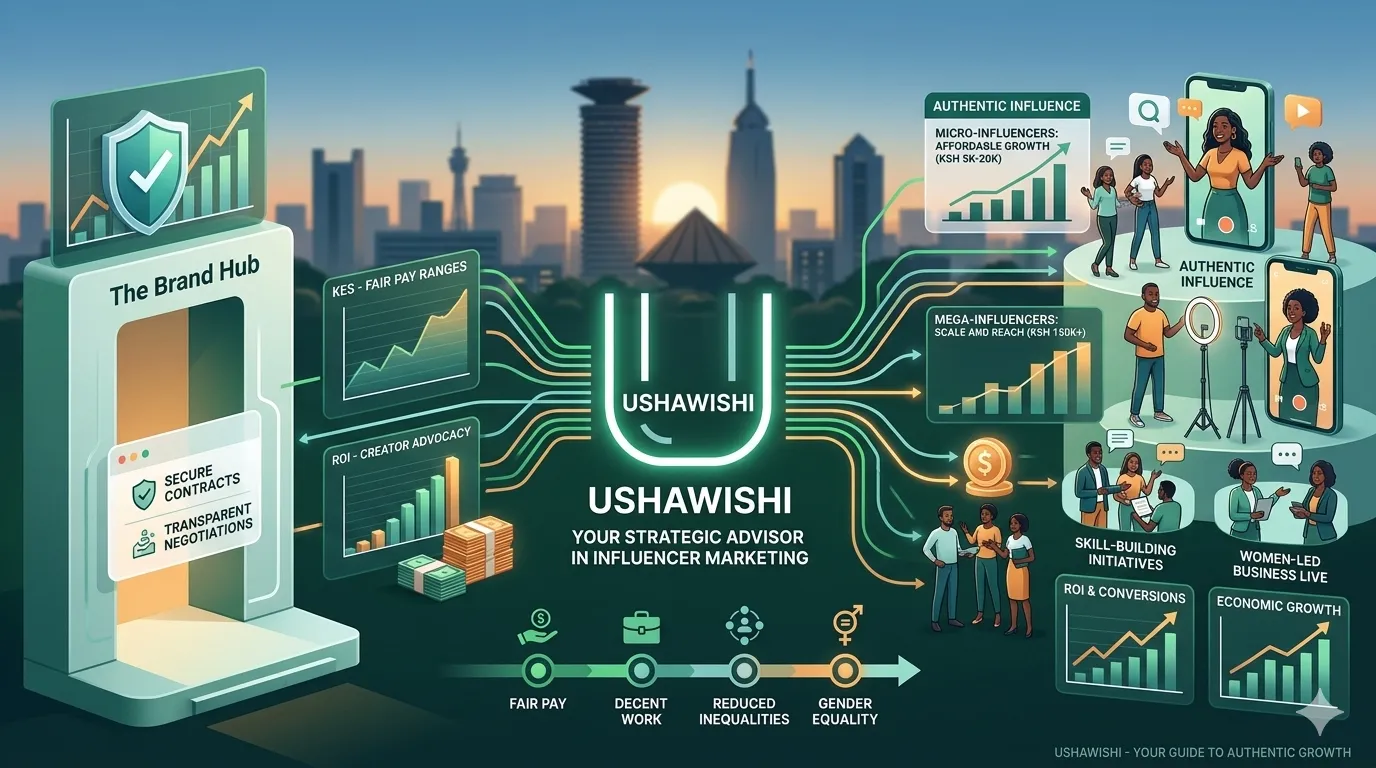
For brand managers in Nairobi and beyond, the "wild west" era of influencer marketing is coming to an end. As we look toward 2026, the focus has shifted from arbitrary negotiations to a structured, ethical, and transparent marketplace. Budgeting for an influencer campaign is no longer about guessing; it’s about understanding value, content complexity, and the social impact of fair compensation.
This guide provides a practical blueprint for marketing teams to navigate costs while upholding the ethical standards that define the Ushawishi ecosystem.
1. Cracking the Code: Typical Price Ranges in Kenya
Influencer rates in Kenya vary based on reach, niche, and engagement. While every creator is unique, the market has settled into these baseline ranges for standard deliverables:
Nano-Influencers (1k–10k): Often work for product trade or fees ranging from Ksh 1,000 to Ksh 5,000 per post.
Micro-Influencers (10k–50k): The powerhouse of engagement. Rates typically fall between Ksh 5,000 and Ksh 20,000.
Macro-Influencers (50k–500k): For broader national reach, expect to invest Ksh 25,000 to Ksh 100,000+ per campaign.
Mega-Influencers (500k+): Household names often require custom quotes, starting from Ksh 150,000 upwards, depending on the scope.
2. Factors That Influence the Invoice
It isn't just about the follower count. Brand managers must account for the type of content being produced:
Video vs. Static: A high-quality TikTok transition or a YouTube review requires more equipment and editing time than an Instagram photo, justifying a higher fee.
Usage Rights: If you plan to use the influencer’s content for your own paid Meta or Google ads, expect to pay a "licensing fee" (usually 20-50% on top of the base rate).
Exclusivity: Asking a creator not to work with your competitors for 3 months adds a premium to the contract.
3. The Ethics of "Fair Pay for Fair Work"
At Ushawishi, we view influencer marketing through the lens of SDG 8: Decent Work and Economic Growth. Ethical marketing isn't just a "feel-good" phrase; it’s a business imperative.
Why Transparency Matters:
The "Shadow" Middleman: Traditional agencies often take large cuts without the creator knowing the true budget. Ushawishi eliminates this, ensuring the person doing the work receives the bulk of the investment.
Timely Payments: One of the biggest complaints in the Kenyan creator economy is delayed payments. Ethical brands prioritize escrow-style payments—where funds are secured at the start and released immediately upon delivery.
Professional Contracts: Ghosting and "verbal agreements" are the enemies of growth. Secure, digital contracts protect both the brand's ROI and the creator's rights.
4. The ROI of Being an Ethical Brand
When you pay fairly and provide secure contracts via platforms like Ushawishi, you aren't just buying a post; you are buying advocacy.
Creators who feel respected and professionally handled are more likely to go above and beyond the brief. They become true brand partners who defend your brand in the comments and provide better creative input. Furthermore, aligning your marketing spend with ethical practices strengthens your brand’s reputation among socially conscious Kenyan consumers.
5. Practical Checklist for Brand Managers
Before you launch your next campaign, ask your team:
Is the rate reflective of the creator's production effort, not just their reach?
Are we using a platform that guarantees secure, transparent payment?
Do we have a clear contract that outlines deliverables and usage rights?
Are we contributing to the sustainable growth of the Kenyan creator economy?
Ushawishi is more than a directory; it’s a standard for professional excellence. By using our tools, you ensure your marketing budget drives both brand growth and community empowerment.