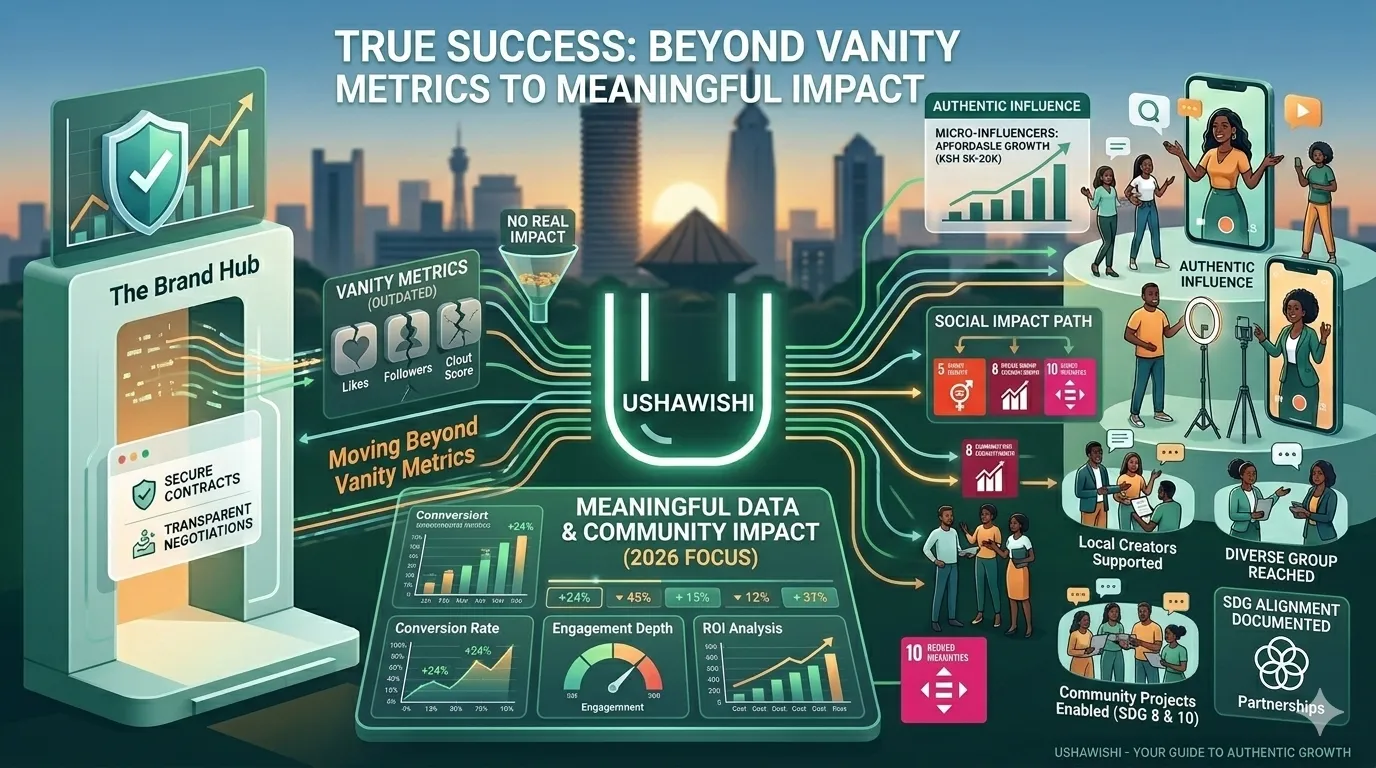
In the early days of digital marketing, a "Like" was the gold standard. Today, however, savvy brand managers and stakeholders in Kenya are asking a much tougher question: “What did those likes actually achieve for our business and our community?”.
As we move toward a more conscious economy, the definition of Return on Investment (ROI) is expanding. It is no longer enough to track clicks; we must track impact. This blog explores how to move beyond vanity metrics to measure the true success of socially impactful influencer campaigns.
1. The Limitation of Vanity Metrics
Vanity metrics—such as follower counts and raw likes—can be misleading. They show that people saw a post, but they don't prove that people cared or that the campaign sparked any real change. To prove real value to stakeholders, you need data that reflects both commercial growth and social empowerment.
2. Essential Marketing KPIs (The Commercial Engine)
Before diving into social impact, your campaign must hit its functional marketing goals. At Ushawishi, we help brands track these core performance indicators in real-time:
Reach: The number of unique individuals who saw the empowerment message.
Engagement: The quality of interaction—shares, saves, and meaningful comments—that indicate the audience is truly processing the content.
Conversion Rate: Tangible actions taken, such as sign-ups for a mentorship program, donations to a cause, or sales of a product tied to a social initiative.
3. Introducing Social Impact Metrics (The Purpose Engine)
This is where socially responsible marketing separates itself from traditional advertising. Success in an empowerment-focused campaign is measured by the tangible benefit left behind in the community. Key metrics include:
Creator Support: The number of local, diverse, or marginalized creators who received fair income and professional opportunities through the campaign.
Community Projects Enabled: Direct links between campaign success and real-world outcomes, such as the number of youth enrolled in skill-building initiatives.
SDG Alignment: Documenting how the campaign specifically contributed to goals like Gender Equality (SDG 5) or Reduced Inequalities (SDG 10).
4. Proving ROI and Social Value to Stakeholders
To win boardroom approval, brand managers must present a holistic view of success. By using the Ushawishi Analytics Dashboard, you can show stakeholders a "Double Bottom Line":
Financial ROI: Showing how the campaign drove brand awareness and sales more cost-effectively than traditional media.
Social ROI: Demonstrating the brand’s role in uplifting the Kenyan creator economy and contributing to national development goals.
5. The Long-Term Benefit: Brand Equity
Measuring social impact isn't just about the current campaign; it's about building long-term Brand Equity. Brands that can prove they are making a difference earn a level of consumer trust and loyalty that cannot be disrupted by a competitor’s discount code.
True success isn't just about being seen—it's about being significant. Start measuring what matters with Ushawishi..